I’m a big fan of the Google Gemini Flash models. They’re smart enough for most use cases, and the latency and cost are hard to beat. Still, a recent experiment caught me off guard: For agentic tasks, where models must plan, call tools, and iterate, the larger, smarter model can end up both faster and cheaper than the supposedly cost-optimized option.
The Experiment
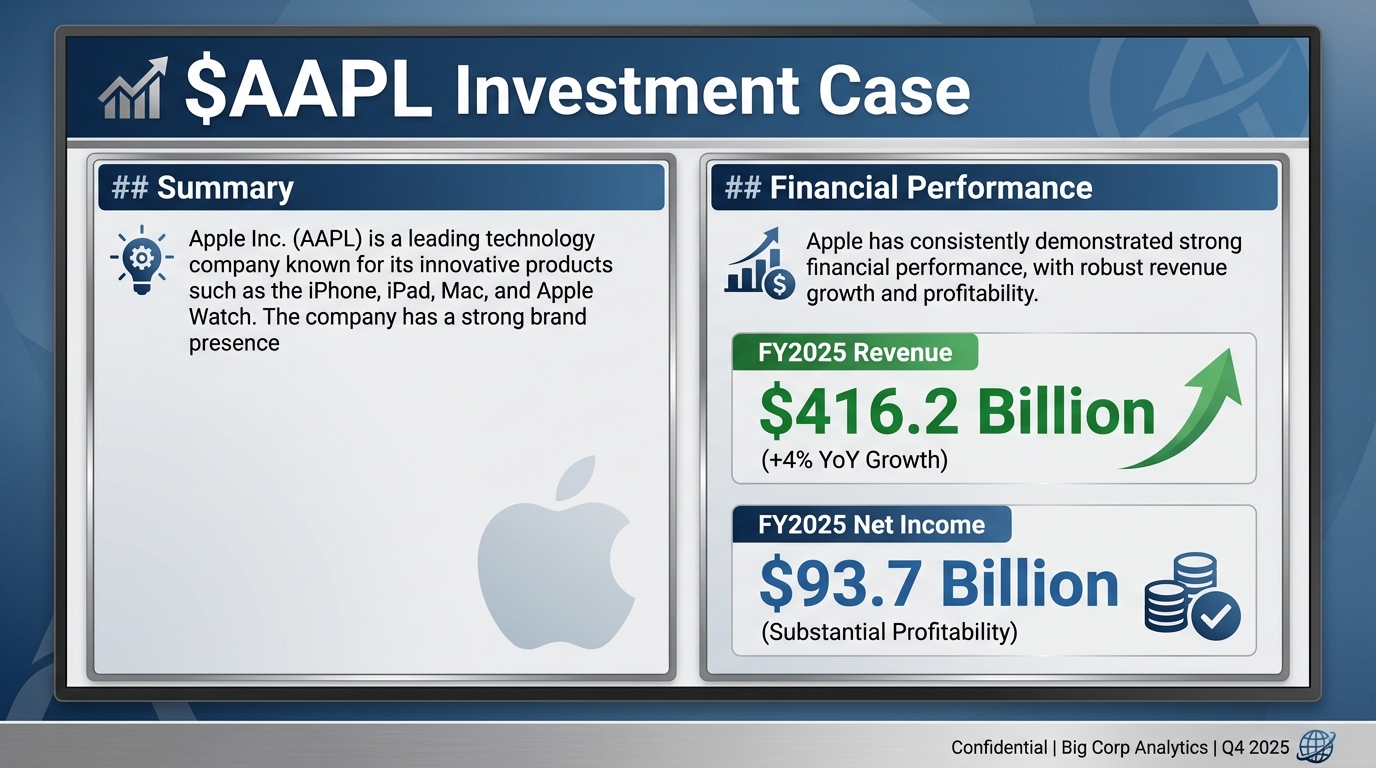
Consider the task of fact-checking claims in a slide against an authoritative source document. In this experiment, the slide contains quantitative statements about a publicly traded company, and the source is the company’s 10-K filing.
Methodology
Using a Code Execution Agent
We could design a system specifically for this task and provide it with tools optimally tailored for reading and searching PDF documents. For this exercise, I think it’s more interesting to keep the system as generic as possible, so I’m only giving the model four generic tools:
bash: Execute a bash commandread_file: Read text or imageswrite_file: Create files on diskgrep: Basically ripgrep
Results
A typical trajectory
Turns out, this works! A typical trajectory for the agent solving the task looks like this:
- Reads the image
- Writes a small Python script that extracts the text layer from our source PDF
- Repeatedly
greps through the text for relevant terms - Finds the income statement
- Correctly concludes that the FY2025 revenue number is correct, the YoY growth rate is wrong, and the FY2025 net income is incorrect because it has been confused with the FY2024 value.
Efficiency and Token Usage
Now, for the question that led me to run this experiment: How efficient are different models at solving this task? I tested gemini-2.5-flash, gemini-3-flash-preview, gemini-2.5-pro, gemini-3-pro-preview, gpt-5.2-pre-feb (before OpenAI announced 40% inference speed improvement), gpt-5.2, and kimi-k2.5 in their default configurations, with 10 rollouts per model. I averaged token usage, number of turns until completion, number of tool calls per turn, and cost.
| Model | Tokens (In / Cached / Out) | Avg. Turns | Tool Calls / Turn | Avg. Duration | Avg. Cost |
|---|---|---|---|---|---|
gemini-2.5-flash | 91,591 / 9,791 / 4,467 | 10.9 | 0.89 | 54.7s | $0.039 |
gemini-3-flash-preview | 99,182 / 5,823 / 6,028 | 8.7 | 1.26 | 86.1s | $0.068 |
gemini-2.5-pro | 46,146 / 0 / 3,294 | 10.7 | 1.21 | 69.2s | $0.091 |
gemini-3-pro-preview | 42,666 / 0 / 5,179 | 6.4 | 1.27 | 94.5s | $0.147 |
gpt-5.2-pre-feb | 30,331 / 18,265 / 801 | 5.6 | 1.53 | 55.5s | $0.068 |
gpt-5.2 | 24,082 / 16,345 / 784 | 5.1 | 1.56 | 62.7s | $0.056 |
kimi-k2.5 | 71,053 / 39,117 / 2,149 | 8.9 | 1.16 | 132.8s | $0.073 |
Per-token pricing can be misleading
A few interesting observations:
- The current cheapest per-token model,
gemini-3-flash-preview, does not deliver the lowest total cost. Despite good per-token pricing, it ends up matchinggpt-5.2-pre-febat $0.068 and costing more than the February update togpt-5.2at $0.056. The gap comes from higher input token usage, more turns, and lower tool calling efficiency per turn. - OpenAI’s
gpt-5.2variants are the most efficient overall. They finish in the fewest turns, make the most tool calls per turn, and manage to cache most input tokens, which results in both lower total cost and faster end-to-end latency than Gemini Flash. - Gemini Pro models use fewer input tokens, but lack prompt caching and have longer runtimes, which makes them the most expensive options in this benchmark.
kimi-k2.5caching works quite well despite using OpenRouter which proxies requests to multiple providers. Still, it has by far the longest execution time.- Google’s implicit prompt caching is severely broken. It sometimes triggers at random, then fails completely during a full rollout. This happens in both AI Studio and the VertexAI API and seems to be widespread yet unfixed.
Conclusion
For agentic, tool-heavy workloads, per-token pricing is a poor proxy for cost or latency. Models that plan better, batch tool calls, and converge faster can outperform ‘cheaper’ models on both dimensions.